


If you’ve ever stared at a report and whispered, “Where did this number come from?” — you’re not alone.
And in Oil & Gas operations, that question costs more than just time.
Most teams are dealing with conflicting reports, missing notes, and multiple versions of the truth, all of which slow everything down. Instead of making decisions, people end up searching, merging, and second-guessing the data. This constant struggle to track down the source of truth means your team spends more time verifying numbers than using them.
There’s a real cost to all of this, and it goes beyond just time.
The Problem: A Disconnected View of Your Operations
When data lives across multiple systems, someone inevitably suggests, “Let’s just use Excel.”
That suggestion kicks off a painful copy-and-paste process just to bring everything into one place. Systems like Land, Accounting, Reserves, Production, and public filings don’t store data in the same place—or even in the same format. While each system provides access to data, they all structure it differently, and each claims to be the source of truth.
The result? Conflicting versions of the same data, often combined into spreadsheets with names like Final_V7_New_New.xlsx. After all that effort, you’re still left questioning whether the numbers are right.
These massive spreadsheets create bottlenecks, delay critical business decisions, and leave your team asking questions rather than using the software as intended.

‘Collect all the data’… what could possibly go wrong?
The Solution: A Single Source of Truth
Fortunately, you don’t have to stay stuck in this cycle of manual data processing. There’s a better way to stop chasing numbers and start trusting them: a data warehouse brings all your data sources into a single, trusted environment, giving everyone one place for analytics, quality control, and decision-making. It acts as a central repository, but it’s much more than just a data dump.
It’s a specialized type of database designed for analytics, built to bring data from all your systems together in one place. Using processes to extract, transform, and load your data, it can pull from existing systems or even your favorite spreadsheet on a shared drive, all while keeping your source of truth intact, with update speeds that might surprise you.
Turning Raw Data into Actionable Insight
Armed with a data warehouse, you can build powerful reports such as master well lists, surveillance reports, morning operations summaries, and cost-tracking analyses. You might be thinking you don’t need a data warehouse to do this with the basic access your software providers already offer—and you’re not wrong.
Owning your data warehouse gives you more control. You, or your Database Administrator (DBA) can create custom views, tailor stored procedures and scale the environment to fit your needs. You can even access the data directly through Excel’s data import tools, allowing your team to work in familiar ways, without the manual cleanup.
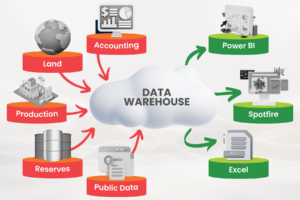
Bringing disconnected systems into one trusted source of truth.
The result is simple: getting your data into a properly structured warehouse allows your team to visualize information instead of wrestling with VLOOKUPs, earning a black belt in Pivot Tables, or sitting through meetings that could have been an email.
And the icing on the cake? Cloud-hosted environments are more affordable than ever!
From Data Frustration to Real Decisions
If your data is buried under layers of software and Excel spreadsheets, and your current process still involves extra steps, extra spreadsheets, and a little guesswork, it’s probably time for something better than, “Death by Database.”